
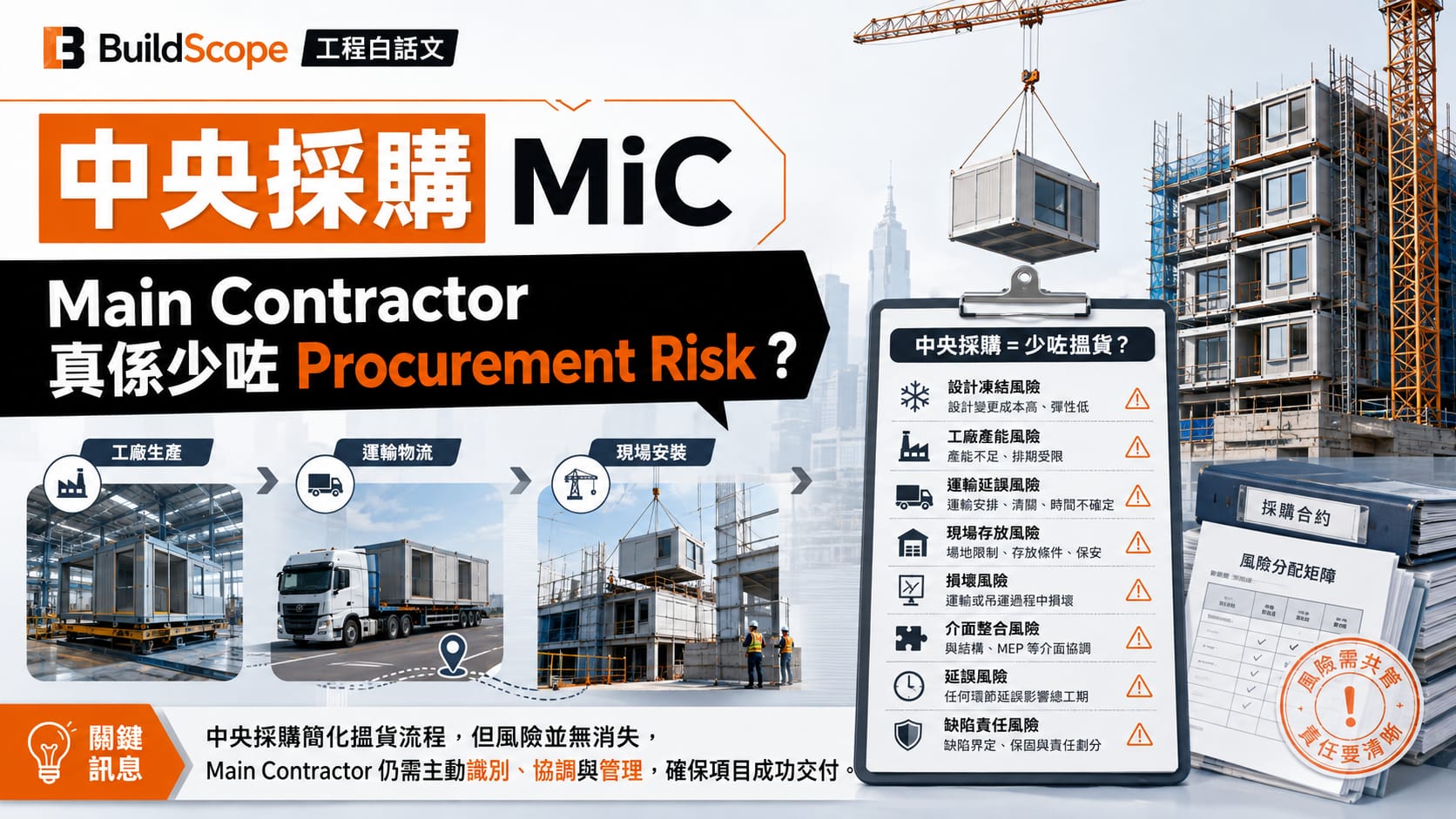
中央採購 MiC,Main Contractor 真係少咗 Procurement Risk?
香港政府正試行 Central Procurement Scheme for Modular Integrated Construction(MiC)modules。發展局於 2026 年 7 月 2 日邀請市場提交意向書,計劃集中採購約 2,000 個鋼結構 MiC 模組,主要支援政府辦公大樓及學校等公共工程;意向書截止時間為 2026 年 8 月 6 日中午。政府表示,試行中央採購 MiC 及鋼筋等常用物料,目標是節省成本。
表面上,中央採購好似可以令 Main Contractor 少做一部分 procurement 工作:不用每個 project 都重新搵 supplier、格價、談供應條件、處理大量 factory coordination。
但對 QS、PM、Contracts Manager 來說,真正問題是:
中央採購是否真的代表 Main Contractor 少了 procurement risk?
答案未必。
很多風險未必消失,只是由「買唔買到」變成「誰負責接口、延誤、損壞、儲存、設計凍結及責任界面」。
1. Central Procurement 不等於 No Procurement Risk
中央採購可以帶來幾個好處:
- 集中採購量較大,理論上有機會降低單價
- 供應商名單及技術要求可能更標準化
- 政府可統一處理部分市場供應安排
- 減少每個項目重複採購及重複審批
- 有利推動 MiC 規模化應用
但承建商仍然要問:
- MiC module 是否完全符合該 project 的 design requirement?
- Factory production programme 是否配合現場進度?
- Site 未 ready 時,module 去邊度放?
- Module 運輸途中損壞,誰負責?
- 安裝接口出問題,是否 supplier、designer、main contractor 還是 subcontractor 責任?
- Delay 是否可申索 EOT 或 cost?
- Defect liability 由誰承擔?
所以,中央採購最多可以減少一部分 sourcing risk,未必可以消除 commercial risk、programme risk 及 interface risk。
2. Design Freeze:MiC 最大風險之一
MiC 與傳統現場施工最大不同,是很多工作在 factory 內預早完成。
這代表一件事:
Design 必須早很多 freeze。
如果設計太遲才定案,就會影響:
- module type
- structural connection
- MEP penetration
- façade detail
- fire services provision
- waterproofing detail
- lifting point
- transportation size
- installation sequence
在傳統工程,部分 design issue 可以現場再協調。但 MiC 一旦入廠生產,修改成本會急升。
對 Main Contractor 來說,要在 tender stage 問清楚:
- Design freeze date 是什麼?
- 誰負責確認 final module design?
- 如果 consultant late approval,factory delay 是否可申索?
- 如果 client design change after freeze,是否屬 variation?
- 如果 factory 需要 rework,費用由誰承擔?
QS 重點: 中央採購可能解決「向誰買」的問題,但未必解決「何時可以定稿生產」的問題。
3. Factory Capacity:中標不代表有產能
MiC 的 production risk 很多時不在地盤,而在工廠。
即使 supplier 已被納入中央採購安排,Main Contractor 仍要考慮:
- factory production slot 是否已預留?
- 不同 government projects 會否同時排隊?
- supplier 是否有足夠 skilled labour?
- factory 是否有足夠 QA/QC team?
- material procurement lead time 是否可靠?
- typhoon、customs、transport restriction 是否影響 delivery?
如果幾個大型政府項目同期需要 MiC modules,factory bottleneck 就會變成 critical path risk。
Tender 時不能只問「unit rate 幾多」,還要問:
- monthly production capacity
- production cycle per module
- peak production loading
- backup factory arrangement
- factory inspection frequency
- recovery plan for delayed production
PM 重點: MiC programme 不應只由 site installation 開始計,而要由 shop drawing、approval、mock-up、factory production、testing、delivery、lifting、installation 全部串成一條完整 programme logic。
4. Delivery:運到香港不等於可以安裝
MiC module 一般體積大、重量高、運輸路線受限制。即使 supplier 已安排出貨,delivery 仍可能受以下因素影響:
- cross-border logistics
- customs arrangement
- road permit
- night-time delivery restriction
- police escort requirement
- temporary traffic arrangement
- lifting window
- barge / trailer availability
- site access readiness
- storage space
所以 procurement risk 會由「買不到」變成「送不到、放不到、吊不到」。
Main Contractor 應在 tender stage 檢查:
- delivery responsibility 到哪一點為止?
- Incoterms / delivery point 如何定義?
- module 到 site 後由誰驗收?
- late delivery 是否有 liquidated damages?
- delivery delay 是否可 claim EOT?
- delivery sequence 是否與 site sequence 一致?
一句講晒: MiC module 不只是 material delivery,而是 programme-critical component delivery。
5. Storage:Site 未 Ready,Module 去邊?
MiC module 很早在 factory 完成,最大問題是:如果 site 未 ready,module 要放在哪裡?
常見情況包括:
- substructure delay
- podium works 未完成
- crane installation delay
- access road 未 ready
- statutory inspection 未完成
- design change hold production
- neighbouring works 影響 lifting zone
如果 module 已完成但不能安裝,就會出現 storage risk。
要問清楚:
- factory storage 是否包括在 central procurement price?
- free storage period 有幾長?
- 超出 storage period 誰付費?
- storage 期間 damage / deterioration 誰負責?
- site storage 是否可行?
- insurance coverage 是否包括 storage period?
- delay 是 supplier delay 還是 site readiness delay?
對 QS 來說,storage cost 不一定是一個小數目。如果數百個 module 要延遲交付或暫存,費用、保險、保護、二次吊運及 programme impact 都可以很大。
6. Damage:運輸或安裝損壞,誰負責?
MiC module 出廠時可能已包括 finishes、fixtures、fittings、MEP components。Buildings Department 對 MiC 的說明亦指出,MiC 是將完成飾面、裝置及配件的獨立組裝模組在預製工廠製造,再運到現場安裝。citeturn507519search11
正因為 MiC module 完成度高,damage risk 亦較複雜。
損壞可能發生在:
- factory handling
- loading
- cross-border transportation
- unloading
- temporary storage
- lifting
- installation
- protection after installation
- follow-on trades working nearby
如果損壞發生,QS / Contracts Team 要立即問:
- damage 發生在 risk transfer 前還是後?
- module 是否已完成 acceptance inspection?
- 是否有 photo record / delivery inspection record?
- repair method 是否由 supplier approval?
- repair cost 誰承擔?
- repair 是否影響 warranty?
- repair 是否影響 fire / acoustic / waterproofing performance?
- delay 是否可申索?
重點: MiC damage 不只是「修補費」,還可能牽涉 performance warranty、approval status 及 handover quality。
7. Interface:真正最大風險可能在接口
中央採購令 module source 更集中,但接口反而可能更多。
MiC 常見 interface 包括:
- module supplier vs main contractor
- module supplier vs structural subcontractor
- module supplier vs MEP subcontractor
- module supplier vs façade subcontractor
- module supplier vs waterproofing subcontractor
- factory design vs consultant design
- government central procurement contract vs project main contract
- site installation sequence vs factory delivery programme
最大的問題是:
如果接口出事,責任是否清楚?
例如:
- module 已到 site,但 RC opening 不準確
- MEP connection 位不一致
- waterproofing detail 與 site condition 不配合
- façade interface 未清楚
- lifting point 與 temporary works 不協調
- shop drawing 已 approved,但現場不能安裝
- module supplier 說是 site issue,main contractor 說是 design issue
Tender 時應建立一份 MiC Interface Matrix,至少列明:
- interface item
- related party
- design responsibility
- supply responsibility
- installation responsibility
- inspection responsibility
- cost responsibility
- delay responsibility
- required information date
- required approval date
- related contract clause
沒有 Interface Matrix,中央採購只會把問題延後到施工階段爆出來。
8. Delay Entitlement:延誤是否一定可以 Claim?
這是 QS / Contracts Manager 最關心的問題。
如果中央採購的 MiC module delay,Main Contractor 是否一定可以 claim EOT?
未必。
要視乎合約如何寫:
- MiC supplier 是否由 Employer 指定?
- Main Contractor 是否仍負責 procurement coordination?
- central procurement delay 是否屬 employer risk event?
- supplier delay 是否當作 contractor risk?
- module design approval delay 是誰造成?
- site readiness delay 是誰造成?
- Main Contractor 有否盡力 mitigate?
- 有否按時發出 notice?
- programme 是否顯示 MiC 在 critical path?
所以,即使中央採購由政府統籌,也不應自動假設所有延誤都可以 claim。
QS / PM 應該建立:
- MiC procurement programme
- approval tracker
- factory production tracker
- delivery tracker
- site readiness tracker
- delay event register
- notice register
- photo and inspection record
核心原則: 沒有清晰 programme logic,就很難證明 delay entitlement。
9. Defect Responsibility:DLP 入面誰孭?
MiC module 完成度高,defect responsibility 亦容易複雜。
常見 defect 包括:
- water leakage
- door / window alignment issue
- MEP connection problem
- fixture damage
- fire-stopping defect
- acoustic performance issue
- façade / joint defect
- corrosion or coating issue
- transport-induced damage
- installation tolerance issue
問題是:defect 到底屬於 supplier fabrication、transport damage、main contractor installation、follow-on trade damage,還是 design issue?
要在 contract / subcontract / supply arrangement 中清楚列明:
- defect notification procedure
- response time
- rectification responsibility
- warranty period
- access arrangement
- cost responsibility
- consequential damage
- replacement module procedure
- spare parts / component availability
- interface defect investigation method
如果沒有清楚安排,到 DLP 時就可能出現「人人都話唔關自己事」。
10. Main Contractor 應如何管理中央採購 MiC?
中央採購下,Main Contractor 不應只等政府或 supplier 安排,而要建立一套自己的 commercial control system。
建議至少包括以下 8 份文件 / register:
1. MiC Design Freeze Register
記錄每個 module type 的 design freeze date、approval status、responsible party 及 outstanding design issue。
2. Factory Capacity & Production Tracker
記錄 production slot、planned start、planned completion、actual completion、inspection status。
3. Delivery & Logistics Register
記錄 delivery date、transport route、permit、escort、site access、lifting window。
4. Site Readiness Checklist
確認 foundation / structure、temporary works、crane、access、storage、inspection 是否 ready。
5. MiC Interface Matrix
拆清楚 supplier、main contractor、subcontractor、consultant、client 之間的責任界面。
6. Damage & Inspection Record
每次 delivery、unloading、storage、lifting、installation 都應有相片及 inspection record。
7. Delay Event & Notice Register
任何可能影響 critical path 的事件,都要記錄、分析及按合約程序發 notice。
8. Defect Responsibility Tracker
DLP 期間將 defect、可能原因、責任方、修補期限及 close-out status 清楚記錄。
11. Tender Review Checklist:中央採購 MiC 必問 20 題
QS / Commercial Team 可在 tender stage 用以下 checklist:
- MiC module 是否由 central procurement supplier 提供?
- Main Contractor 是否有權選擇 supplier?
- supplier delay 是否 contractor risk?
- design freeze date 是否清楚?
- design change after freeze 如何估值?
- factory production programme 是否納入 master programme?
- delivery point 及 risk transfer point 是否清楚?
- storage cost 是否包括?
- extended storage cost 誰承擔?
- transport damage 誰負責?
- site handling damage 誰負責?
- module acceptance procedure 是什麼?
- factory inspection 是否 mandatory?
- installation tolerance 誰負責?
- MEP / structural / façade interface 是否清楚?
- central procurement contract 與 main contract 如有衝突,以哪份為準?
- delay 是否可申索 EOT / cost?
- DLP responsibility 如何分配?
- warranty 是否直接由 supplier 提供?
- 有否要求 Main Contractor 提交 MiC management plan?
12. BuildScope 總結
中央採購 MiC 可以提升採購效率、降低重複工作,亦有助推動 MiC 規模化發展。
但對 Main Contractor 來說,風險不會因為「中央採購」四個字就自動消失。
真正要管理的是:
- Design Freeze
- Factory Capacity
- Delivery
- Storage
- Damage
- Interface
- Delay Entitlement
- Defect Responsibility
中央採購可能減少 supplier sourcing risk, 但會放大 interface management、programme control 及 contractual responsibility 的重要性。
一句講晒:
中央採購 MiC,不是 Main Contractor 少了風險, 而是風險由 procurement price 轉移到 interface、programme、storage、damage、delay 同 defect responsibility。